Cloudy Water and Other Pool Chemistry Questions We Hear Every Season
Straight answers to the pool chemistry and upkeep questions that come across our counter every summer.
October 27, 2026 · 4 min read
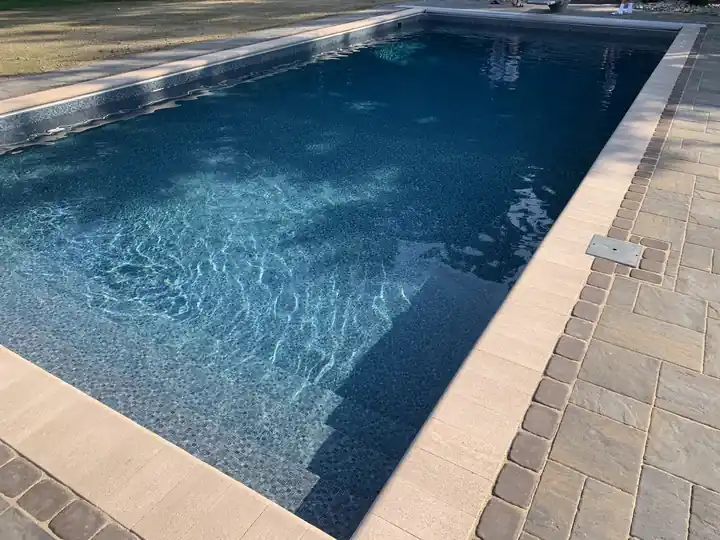
Water chemistry is a very important part of owning a pool, and it does not have to be confusing. Everything that goes into your pool affects the balance of the water, and the water is constantly changing. Here are the questions we hear most from homeowners around Butler, Mars, Wexford and North Pittsburgh, with the answers we give at the counter.
Why is my pool water cloudy?
There is rarely a single reason. Cloudy water can come from compounding issues, and we always start by checking the sanitizer. Cloudy water is generally caused by low sanitizer. Other possible causes are high pH, high total alkalinity, high calcium and poor filtration.
The usual path back to clear water goes like this:
- Test the water and adjust the pH.
- Address any known metal issues.
- Backwash the filter or clean the cartridge.
- Add algaecide.
- Shock the pool.
- Keep the filter running continuously until the water clears, backwashing or cleaning as needed.
Bring a water sample to the store and we can tell you which of those causes you are dealing with, instead of guessing. One more thing we say often: thinking that clear water is healthy water can prove to be very costly. Water can look fine and still be out of balance.
Signs the water is out of balance
Cloudy water is only one signal. Your pool is probably out of balance if you notice any of these:
- Eye and skin irritation
- Staining
- Wrinkles in vinyl liners
- Sanitizers that stop working well
- Corrosion of metals such as pump seals, heaters and lights
- Scale build-up, a white chalky look on pool surfaces
The liner wrinkles and the metal corrosion are the expensive ones, which is why we would rather see a sample early than a ruined heater late.
Filters, pumps and temperature
Most manufacturers recommend a complete tear down and cleaning of the pool filter at least twice a year. The exact number depends on the size of your pool and the size and type of your filter.
On pump run time, most residential filtration systems are sized to circulate and filter the water twice in an 8-hour period. Running your pump 10-12 hours a day in the summer keeps the water moving and clear. Filtering is a key part of keeping water clear, and cutting pump hours to save a little electricity usually costs more in chemicals and cleanup.
Water temperature is up to you. The typical range is 78-82 degrees Fahrenheit. Each degree you raise it costs roughly 10 to 30 percent more in energy, so a cover helps cut heat loss. Evaporation is the largest source of energy loss for a pool, and a cover also reduces chemical loss and keeps debris out.
Is my pool leaking? The bucket test
Pools lose water to evaporation all the time, so a lower level does not always mean a leak. This simple test with an ordinary 5 gallon plastic bucket sorts it out:
- Bring the pool water to its normal level.
- Fill the bucket with pool water to about 1 inch from the top.
- Set the bucket on the first or second step of the pool.
- Mark the water level on the inside of the bucket.
- Shut off the pump and mark the pool water level on the outside of the bucket.
- Turn the pump back on and run it normally.
- After 24 hours, compare the two marks.
If the pool water, the outside mark, has dropped more than the water inside the bucket, there is probably a leak. The test is only valid for 24 hours, so do not leave it longer and trust the result.
Never drain your pool
People ask whether it is safe to drain a pool. Our answer is that you should never drain your pool on your own, and always use an experienced professional. Concrete and fiberglass pools can float out of the ground like a huge boat, and the liner in a vinyl pool can float and can shrink in a matter of a few hours. A drained pool is a pool that may need major repair.
Salt chlorination and the spin lab
Salt chlorination is an alternative to traditional liquid or solid chlorine. A salt system converts dissolved salt into chlorine, so there is no more hauling and storing of large amounts of chlorine. Salt chlorination is one of our services, and the system we point customers to is the Hayward AquaRite. We love it, and whichever way you sanitize, we will help you keep the water balanced.
When you want a real answer, bring a sample to the store. We use the Lamotte spin lab for accurate test results and recommendations, and we also tell customers that all chemicals are not created equally. To talk through your water, call 724-352-7549 or visit the store on North Pike Road.
Goodlin Pools & Spas, 724-352-7549
Call 724-352-7549More articles
Spring Pool Opening: What the Goodlin Crew Does and What You Do First
A plain walk through a Goodlin pool opening, from pulling the cover to the first shock and algaecide.
Steel Wall Vinyl Liner Pools Explained
A homeowner's guide to the kind of inground pool we specialize in, and the choices you will make along the way.